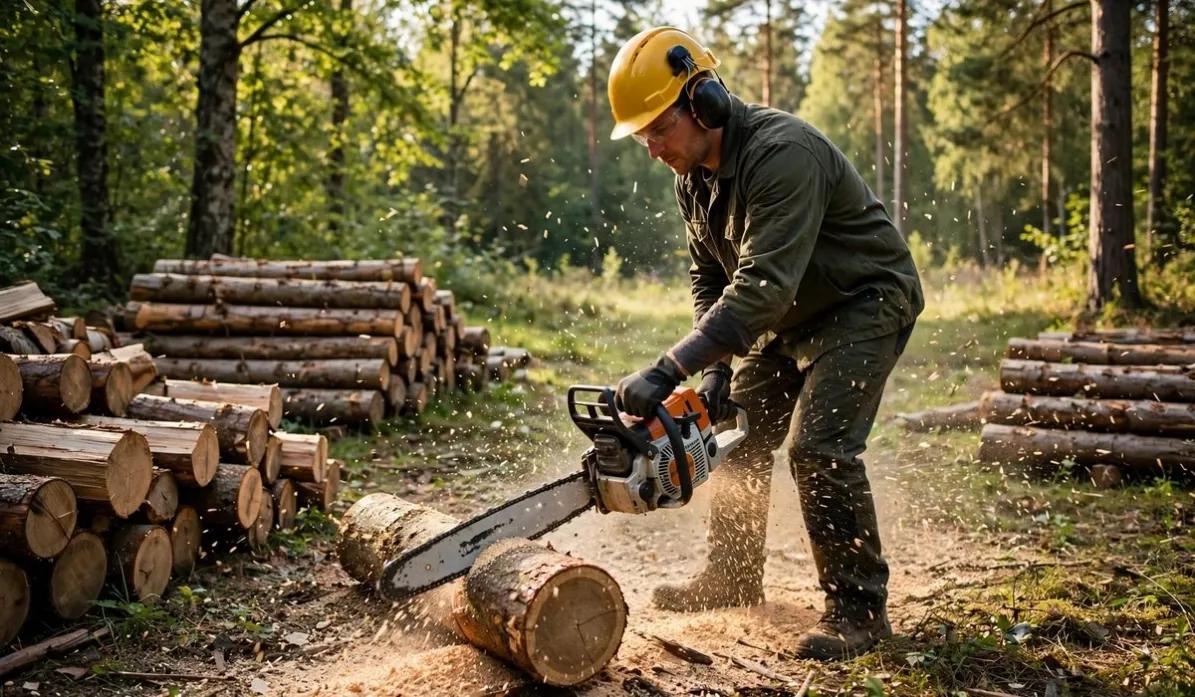
For felling, bucking large timber and long days of cutting, petrol remains the default. Owners keep coming back to the same reasons: runtime, sustained power under load, and the ability to refuel and keep going. A battery saw can cut well, but a full day of firewood or storm cleanup still belongs to a petrol saw. The threads are consistent on this — when the wood is big and the job is measured in hours, petrol is the recommendation that survives the argument.
That is good news for your parts stock. The petrol fleet already in service is large, it stays in service for years, and every one of those saws needs the same wear parts: sprockets, clutch drums, rims, oil pumps, spark plugs, fuel filters and air filters. Battery saws change the mix of what you stock; they do not remove the need for petrol-saw parts.
Battery wins the light, occasional jobs
Battery saws have earned their place too. For trimming, clearing small branches and occasional use around the home, owners describe them as quiet, easy to start and low maintenance — no fuel mixing, no pull-start struggle, no exhaust. Models such as the EGO and Milwaukee M18 ranges are widely described as good enough for this work, and for a homeowner who cuts a few times a year, that is all that matters.
The limits are just as clearly stated. Battery life and oil leaks come up again and again as things to watch, and for big wood or bulk cutting, battery saws run out of steam — literally. Your customers who buy a battery saw for heavy work are the ones who come back disappointed, and a disappointed customer blames the saw, the dealer and the parts alike.
What this means for the parts you stock
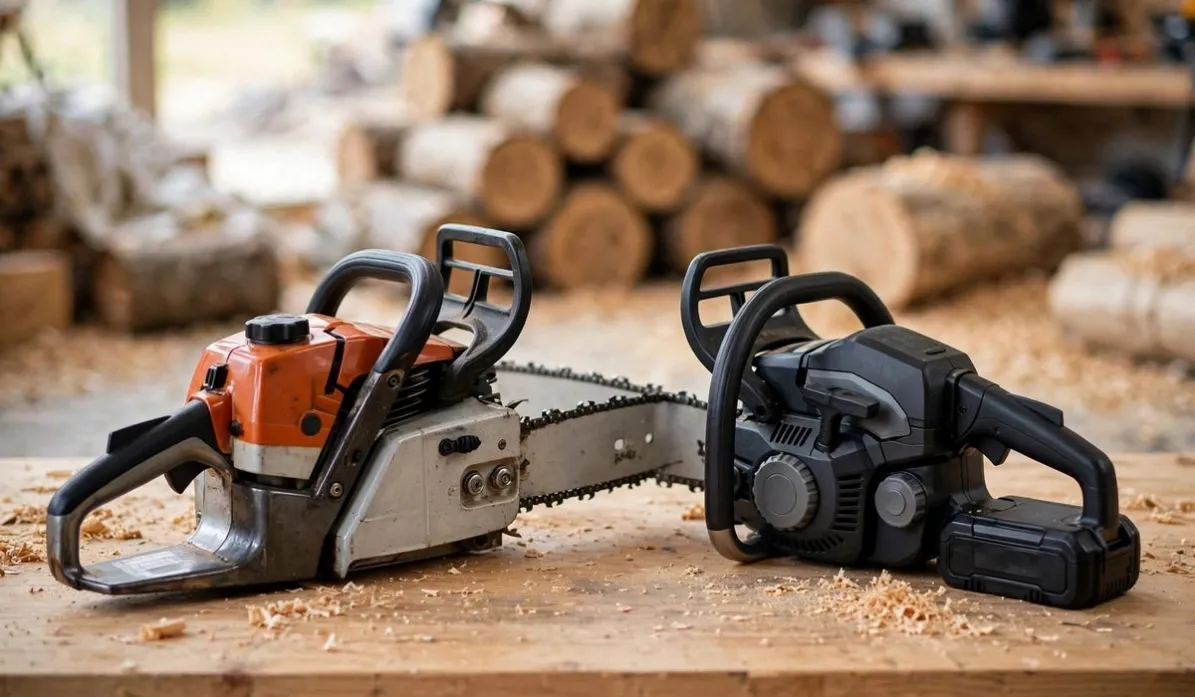
The real mistake is treating this as a choice you have to make once. Your customers are not choosing one side for life — many run both, a petrol saw for the serious work and a battery saw for the quick jobs. The buying question your customers actually ask is simpler than the debate makes it sound: which saw fits the work I do most?
That is the question worth asking your own customers, because their answer tells you what to keep in stock. A workshop that services mostly petrol saws needs a deep bench of petrol wear parts, matched to the brands and models its customers run — Stihl, Husqvarna, Echo and the rest. A shop whose customers are shifting to battery work still needs petrol parts for the older fleet, plus the consumables battery saws share, such as chains and bars.
The part that protects your reputation either way
Whichever saw your customer runs, one failure damages your reputation fastest: a chain that runs dry. A bar starved of oil wears out early, overheats, and sends the customer back to you with a complaint about the saw — and about the parts you supplied. That is why the oil pump matters more than it looks on a parts list.
Every oil pump we supply is tested at operating speed before it leaves the factory, with stable oil output per minute — because a chain that runs dry wears out the bar, and a bar that runs dry costs your customer their reputation. Samples and bulk orders are made to the same standard, so the parts your customer tests are the parts they receive.
Next step
Tell us which saw models your workshop services most — petrol, battery, or a mix of both — and we will put together the matching sprocket, rim, clutch drum and oil pump list for those models.
You can browse the full chainsaw parts range here: https://www.zfmparts.com/products