MS 382 Chainsaw Parts: 5 Problems Users Ask About Most — And the Parts That Fix Them
From won't-start saws to slipping clutches: the questions MS 382 and brushcutter users ask most on Reddit, what actually causes them, and which replacement parts fix them for good.
MS 382 Chainsaw Parts: 5 Problems Users Ask About Most — And the Parts That Fix Them
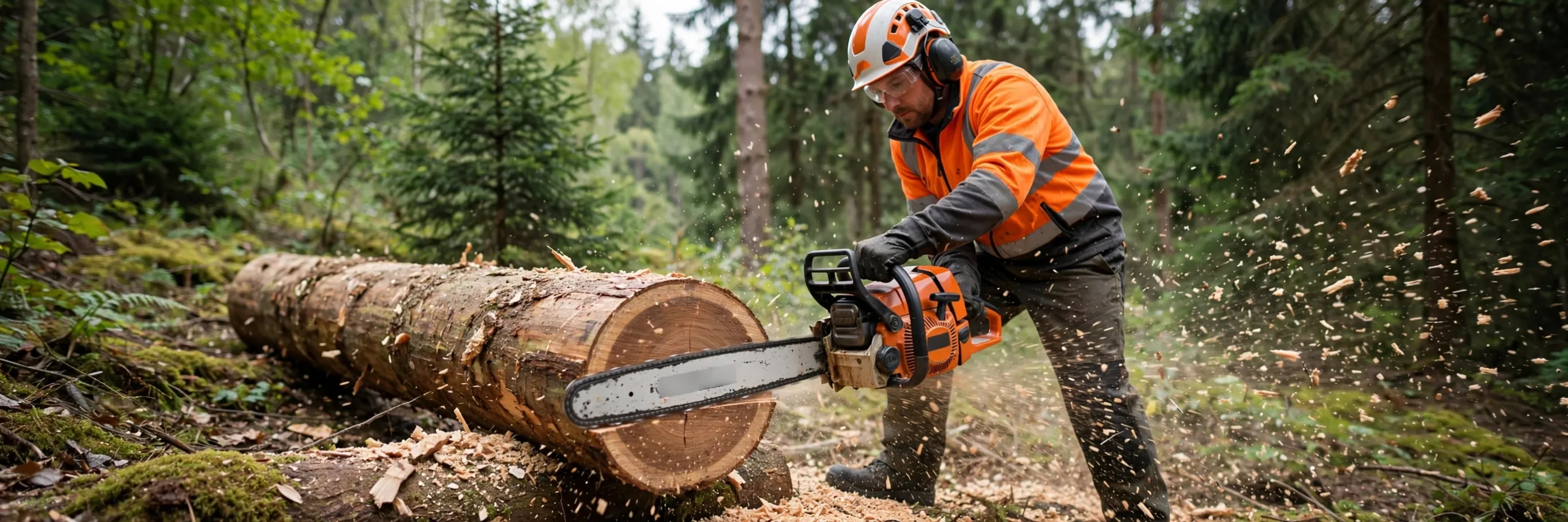
Alt text: Professional worker cutting a log with a gasoline chainsaw
Spend any time in chainsaw and brushcutter communities on Reddit — r/Chainsaw, r/smallengines, r/Tools and the brand forums — and you will see the same questions come up again and again. Different saws, different countries, same five problems.
That is good news. These problems are well understood, and most of them are not engine failures at all. They are worn, clogged, or wrongly matched parts — and they can be fixed in under an hour once you know what to look for.
Here are the five most-discussed problems, what really causes them, and the parts that fix them. Throughout the article we use one saw as the working example: the MS 382 — the 72.2 cc, 3.9 kW / 5.3 hp professional saw with a 3/8" chain that has become a workhorse in forestry, agriculture and plantation work, and the model our customers ask us about most.
1. "My saw won't start after winter" — the ethanol problem
This is the single most repeated question every spring. The saw ran fine in autumn, sat in the shed for three months, and now it will only run on choke — or not at all.
In thread after thread, experienced users give the same verdict: it's the fuel. Ethanol-blended gasoline absorbs moisture during storage, separates, and leaves a sticky varnish inside the carburetor's tiny jets and metering diaphragm. Primer bulbs crack, fuel lines go soft, and the in-tank filter clogs.
Check in this order — fuel, spark, air:
- Drain the old fuel and refill with a fresh mix at the correct ratio (50:1 on most modern saws).
- Fit a fresh spark plug — it is cheap and rules out a whole category of problems.
- Check the air filter and the spark arrestor screen.
- If it still only runs on choke, the carburetor needs cleaning or a rebuild kit: diaphragm, gaskets, fuel filter, fuel lines and primer bulb.
Prevention: run the saw dry before long storage, or store it with stabilized, ethanol-free fuel. Ninety percent of "dead saw" posts would never happen with this one habit.
2. "My new chain goes dull in one cut" — sharpening, dirt, and worn bars
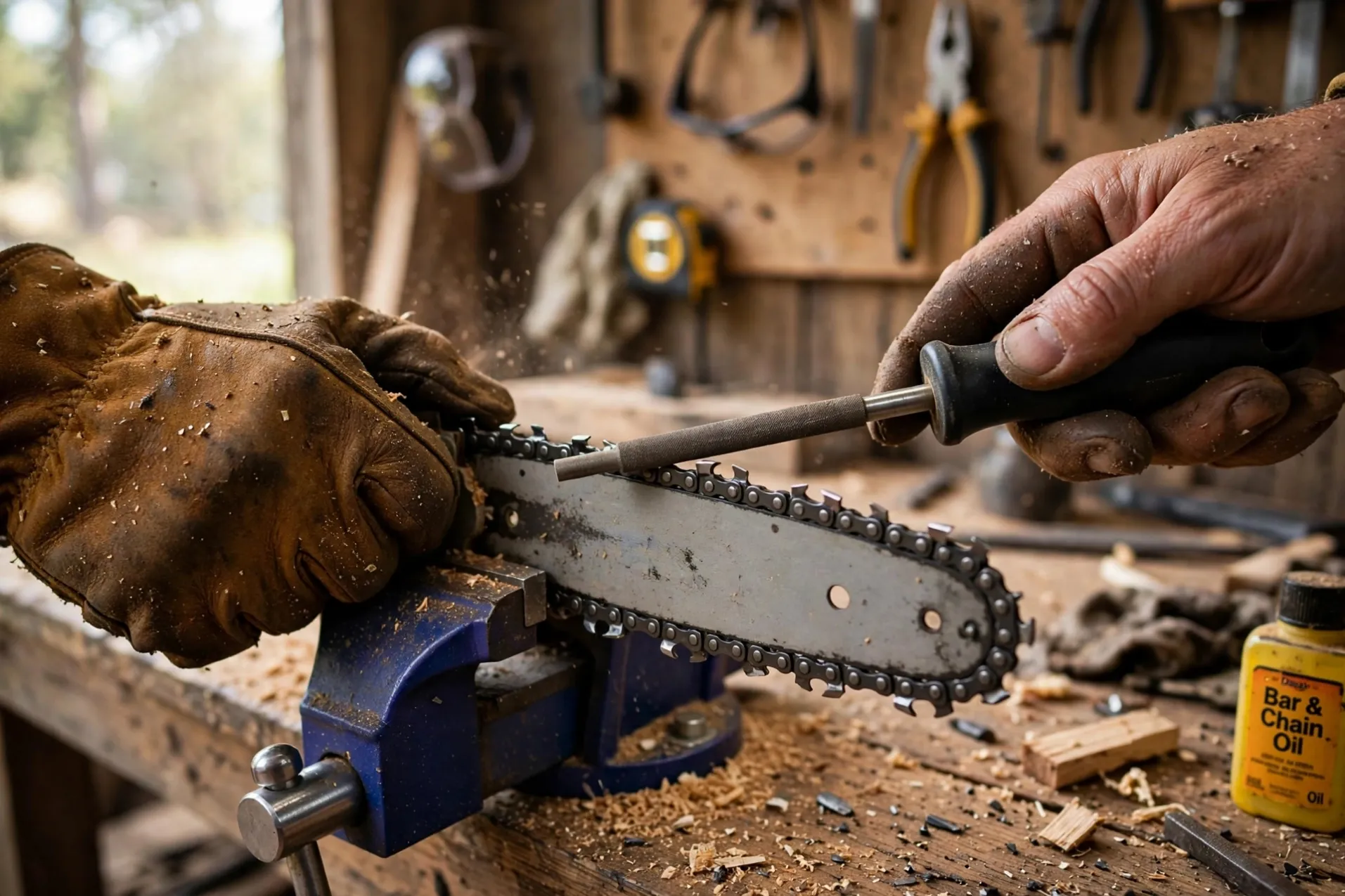
Alt text: Sharpening a chainsaw chain with a round file in a workshop
The second-biggest topic is cutting performance: chains that dull almost instantly, saws that cut in a curve instead of straight, dust instead of chips.
Reddit's experienced cutters repeat three points:
- Dirt dulls a chain faster than wood ever will. One touch of soil, sand or a hidden rock is enough to take the edge off a whole side of cutters — and unevenly dulled cutters are exactly why a saw starts cutting in an arc.
- Sharpen little and often. A couple of file strokes on each cutter at every fuel fill-up keeps an edge far better than grinding a badly dulled chain back to life. Keep the strokes even on both sides, and check the depth gauges (rakers) — rakers left too high make a sharp chain cut like a dull one.
- Sometimes it isn't the chain — it's the bar. A worn, unevenly dressed bar, a clogged bar groove and oil hole, or a chain with the wrong gauge for the bar will all feel like a "dull chain."
Sharpen or replace? Sharpen while the cutters are intact and the wear marks are not reached. Replace the chain when cutters are cracked, uneven beyond correction, or worn to the service marks — and always match pitch, gauge and drive link count to your bar. One number wrong means the chain does not fit, no matter what brand is on the box.
3. "The chain keeps coming loose — and the bar is smoking"
Loose chains, hot bars and smoke generate hundreds of posts. The causes discussed most often:
- Chain tension set while cold, then re-checked never — tension should be snug, with the chain still able to glide around the bar by hand.
- A worn drive sprocket: hooked or deeply grooved sprocket teeth stretch a new chain quickly and keep throwing tension out. When you replace a chain, inspect the sprocket — chains, bars and sprockets wear as a system.
- A blocked oiler path: sawdust packed in the bar groove and oil hole starves the chain of oil. A healthy saw throws a line of oil off the bar tip and uses roughly one tank of bar oil per tank of fuel. Smoke means stop and clean the groove, oil hole and clutch cover — not "push harder."
4. "The engine runs, but the brushcutter head won't spin"
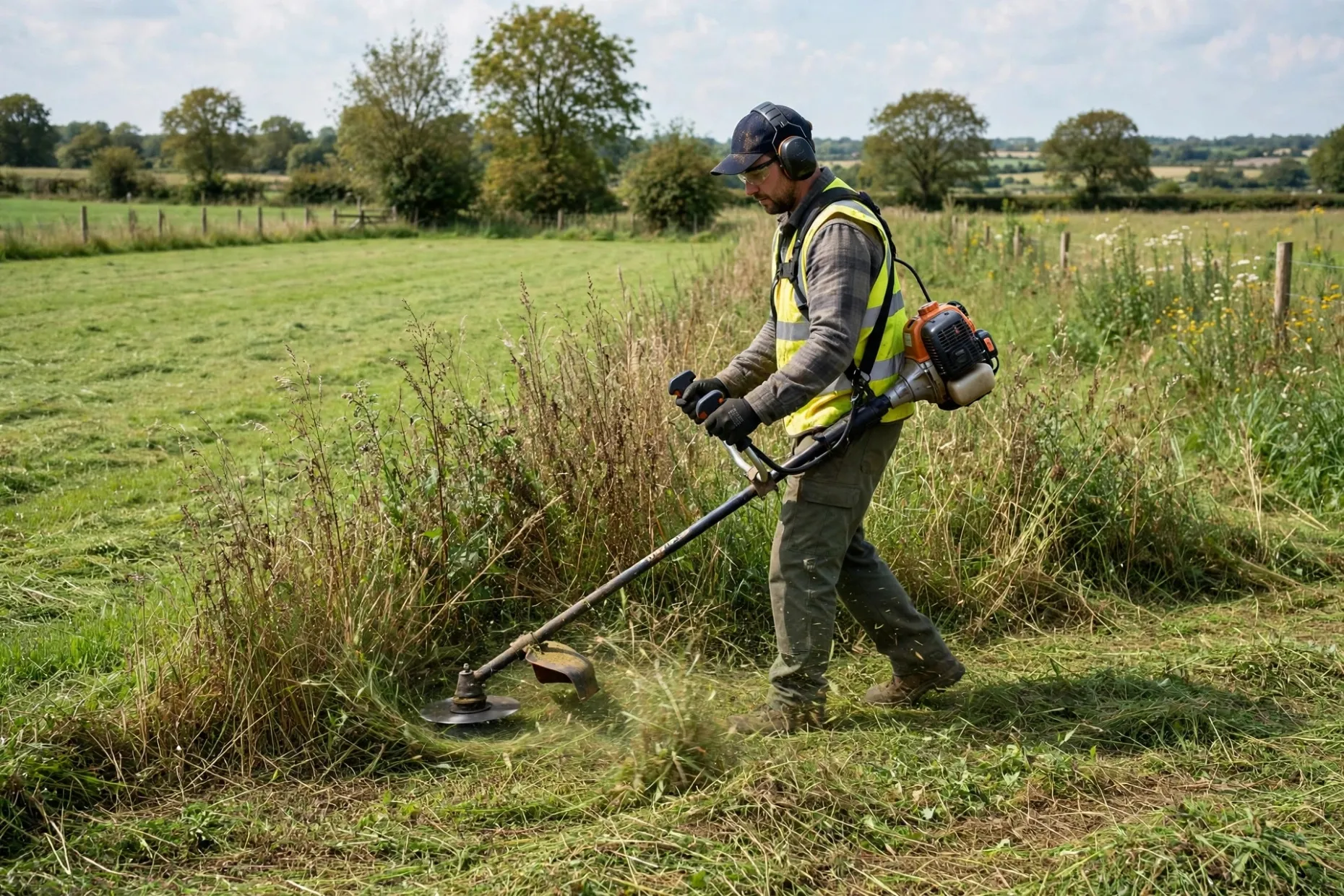
Alt text: Worker clearing tall grass and weeds with a gasoline brushcutter
Over in the brushcutter threads, this is the classic question: full revs, no drive. The community's diagnosis path is consistent:
- Shaft connection first — on split-shaft machines, the square drive ends often are not fully seated. A 10 mm gap is enough to lose all drive.
- Clutch next — the centrifugal clutch is the usual suspect. Two symptoms give it away:
- Head spins at idle / rattling at the front → a broken or stretched clutch spring.
- Head slips or stops under load → worn or heat-glazed clutch shoes, often caused by constantly feathering the throttle, which slips the clutch and bakes the friction surface smooth.
- Gearbox last — grass and debris packed into the gear head, or a dry, seized gearbox.
A worn clutch drum makes things worse: grooves worn into the drum stop new shoes from seating properly, so shoes and drum should be inspected — and often replaced — together.
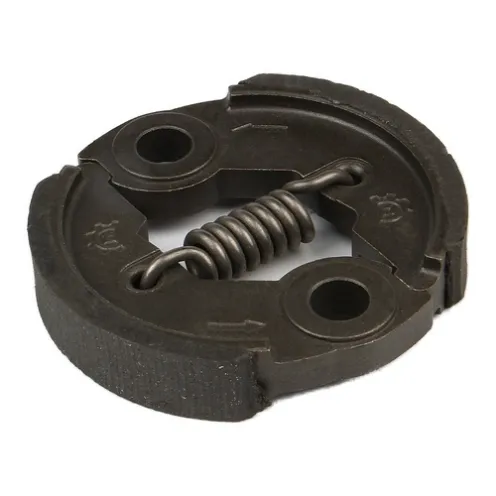
Alt text: Replacement centrifugal clutch assembly for chainsaw and brushcutter parts
5. "OEM or aftermarket parts?" — the debate that never ends
No topic splits opinion like this one. Professionals who earn a living with their saws tend to say OEM for anything critical — downtime costs more than the part. Homeowners and repair shops point out that quality aftermarket parts keep older saws running that would otherwise be uneconomical to repair.
Reading across the threads, a practical consensus emerges — and it is not about the label:
- Fit comes first. For chains, that means pitch, gauge and drive link count. For clutches, starters and carburetors, it means the exact model match. A part that "looks the same" is not the same.
- Quality is visible in the details — clean machining, consistent heat treatment on chains and sprockets, springs that hold tension, diaphragms that resist ethanol.
- Buy wear parts from a maker who tests them. Chains, bars, sprockets, clutches, filters, fuel lines and starter parts are consumables. A tested, precision-made replacement will outlast a bargain part several times over — and protects the engine parts around it.
That is exactly the standard we build to: precision replacement parts for chainsaws, brushcutters and garden tools, tested for fitment, durability and performance before shipment — with OEM and ODM support for distributors.
Featured model: MS 382 — the parts owners replace most
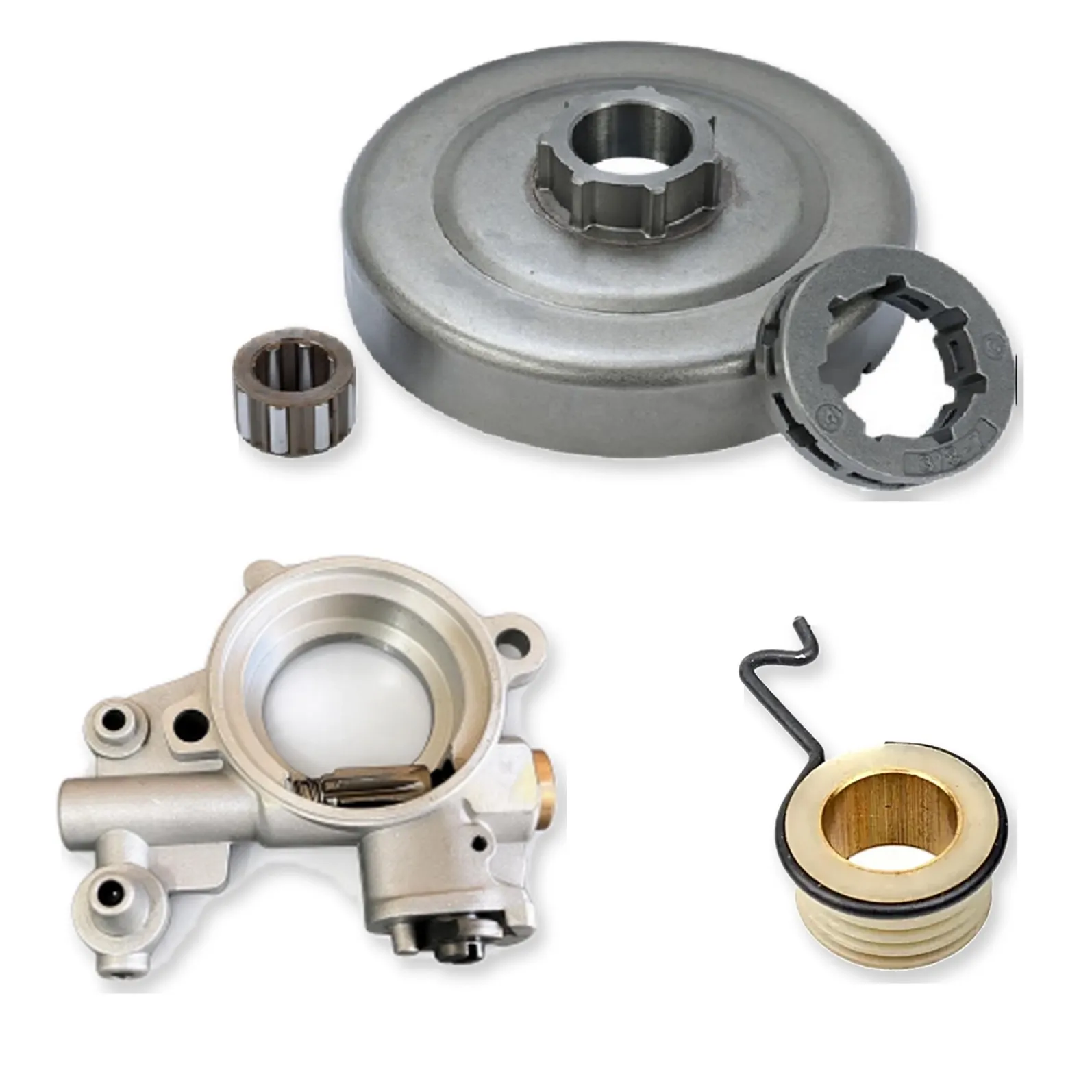
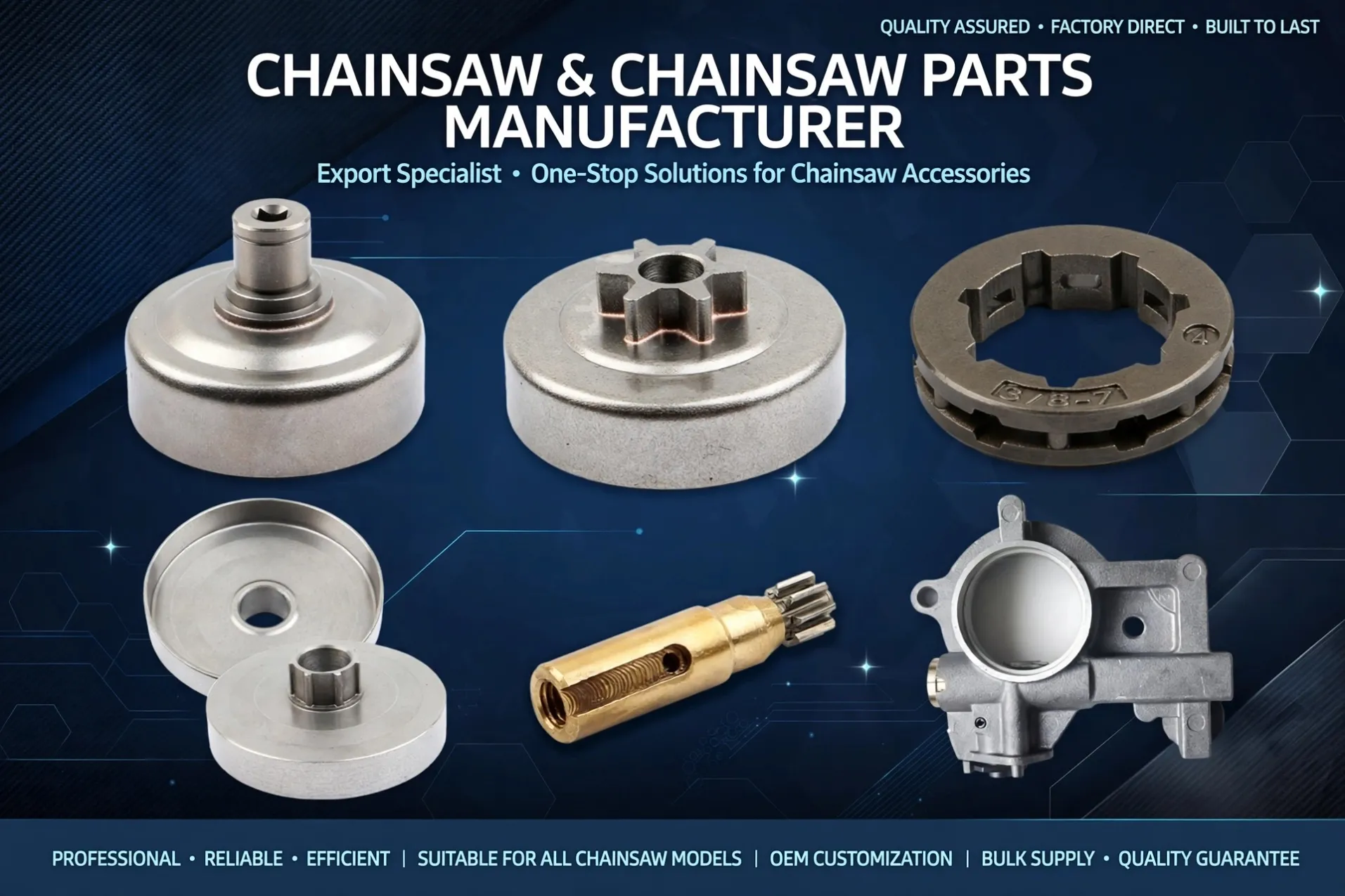
Because the MS 382 works hard for a living, its drive system wears in a predictable pattern. That is why our MS 382 range focuses on exactly the parts that drive the chain and feed it oil — the parts behind problems #2 and #3 above. These are the lines our distributors and repair shops reorder most:
MS 382 part | What it does / fixes |
|---|---|
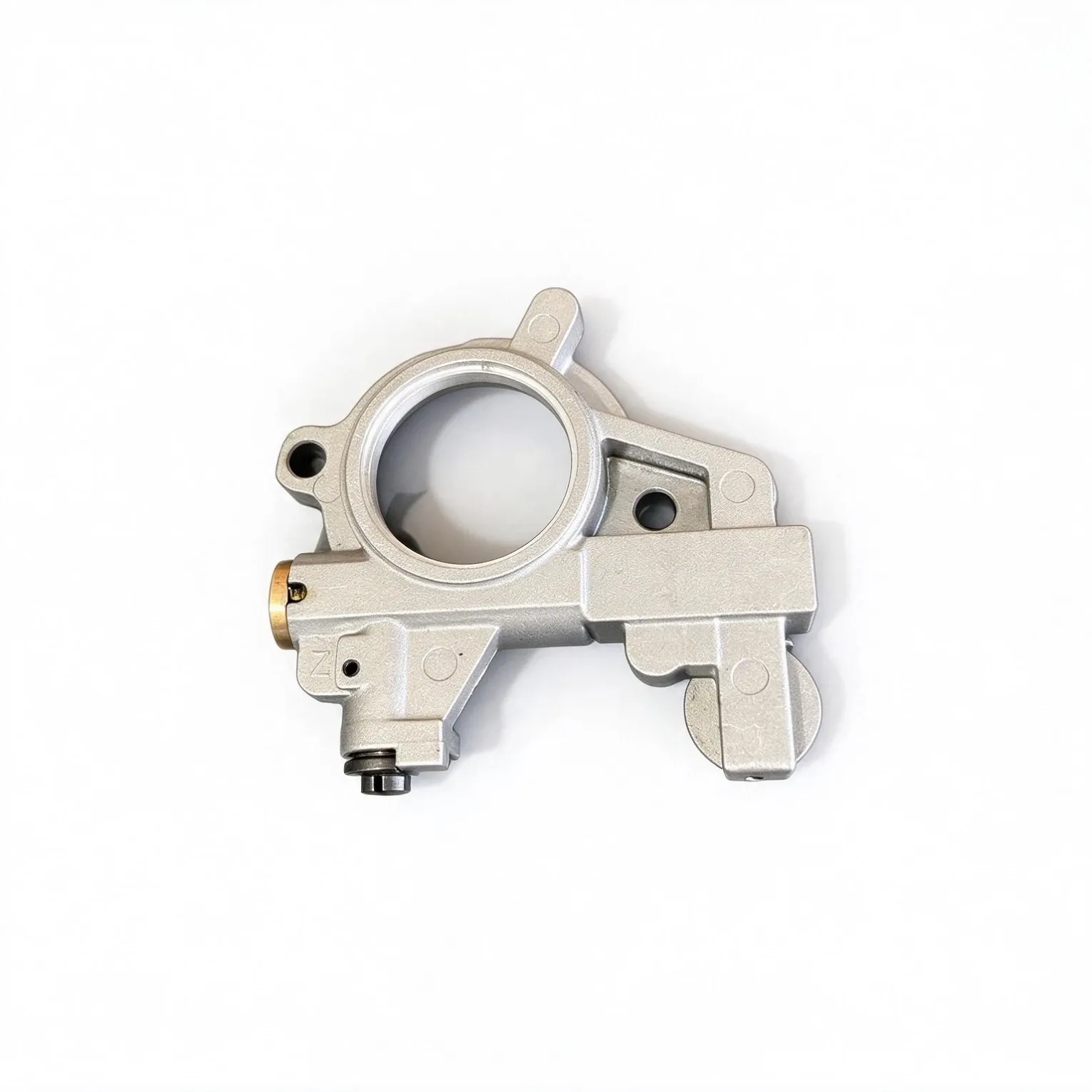
Oil pump & worm gear | Drives chain lubrication. A worn worm gear is the hidden cause of a dry, smoking bar and a chain that dulls fast (#2, #3) |
Clutch assembly | Transfers engine power to the chain. Worn shoes slip under load; a broken spring makes the chain creep at idle |
Integrated clutch drum (one-piece) | Drum and sprocket in one solid unit — simple, strong, replaced as a complete part |
Split clutch drum (rim type) | Drum with a separate rim sprocket — when the teeth wear, replace only the rim, not the whole drum |
Rim sprocket, 3/8" | The wear point of the drive system. Hooked or grooved teeth stretch a new chain and keep throwing the tension out (#3) |
One tip from the repair threads: the clutch, drum, rim sprocket and worm gear wear together. Replacing one worn part while leaving its worn partner in place is the most common reason the same fault comes back a month later — inspect the whole drive system while the cover is off.
Every MS 382 part we supply is checked for exact fitment against the original specification and tested for durability before shipment, and all of them are available for OEM/ODM orders with custom logo and packaging.
Browse MS 382 parts → (link to your MS 382 category page)
Quick-reference: symptom → likely part
Symptom | Check / replace first |
|---|---|
Won't start after storage | Fresh fuel, fuel filter, primer bulb, carburetor kit |
Only runs on choke | Carburetor diaphragm, fuel lines |
Cuts in a curve, dust not chips | Sharpen evenly, check rakers, inspect bar |
Chain keeps loosening | Drive sprocket, tensioner, chain stretch |
Bar smoking / running dry | Bar groove & oil hole, oil pump |
Brushcutter head spins at idle | Clutch spring |
Brushcutter head slips under load | Clutch shoes and drum |
Pull starter rope snapped / won't recoil | Starter rope, recoil spring, starter assembly |
Find the part that fits your model
Start with the parts that fit your chainsaw or brushcutter model, then narrow the catalog from there — if you run an MS 382, start with our MS 382 range. Explore by use, model, or availability, and if you are not sure about fitment, ask us before you order. For wholesale and OEM/ODM enquiries, we support custom logo, packaging and specifications.
Browse MS 382 parts → (link to your MS 382 category page)
Browse the full catalog → (link to your catalog page)
Ask about fitment → (link to your contact page)