Buying Guides
Chainsaw Won't Start? Diagnose It in 10 Minutes
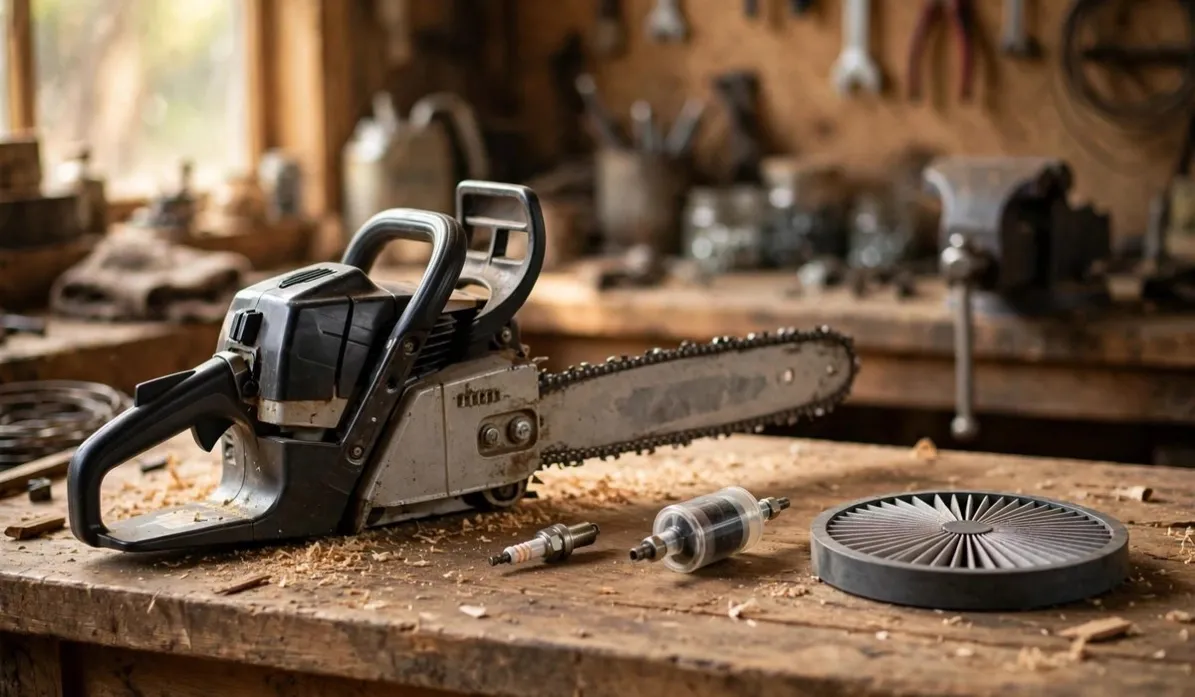
A customer walks into your shop with a chainsaw that will not start, and the first thing they assume is the worst: the engine is dead, the saw is finished, and somebody owes them a new one. In most cases, none of that is true. A saw that refuses to start is usually failing on one of three simple things — fresh fuel, spark, or air — and a trained pair of hands can find the cause in about ten minutes. For a distributor or repair shop, that ten-minute check is worth more than it looks: it turns a frustrated customer into a quick sale of small wear parts, and it protects your reputation as the place that fixes things instead of selling replacements.
Step 1: Check the fuel first — stale mix is the number one cause
Start with the fuel tank, because old mixed fuel is the single most common reason a saw will not start. Petrol mixed with two-stroke oil goes stale, and fuel left in the tank for more than a month is the first suspect, especially if it contains ethanol. Ask the customer when they last filled the tank. If the answer is "last season," drain the old mix, fill with fresh fuel mixed to the manufacturer's ratio, and try again. While the tank is open, look at the fuel filter: a dark, clogged filter starves the carburettor, and a cracked fuel line lets air in. Both are cheap parts, and both are worth replacing on the spot rather than cleaning and hoping.
Step 2: Check for spark — and check whether the engine is flooded
Pull the spark plug and look at it. A plug coated in black carbon will not fire cleanly; a wet plug means the engine is flooded. Flooding is the classic self-inflicted problem: too many pulls with the choke on, and the cylinder fills with fuel. The fix is simple — dry the plug, pull the starter a few times with the choke off and the throttle open to clear the cylinder, then refit the plug and try a normal start. If the plug is dry but fouled, fit a new one. If there is no spark at all with a known-good plug, the ignition coil is the next thing to test, and that is a job for the bench rather than the counter. Keep spark plugs in stock by model: they are the part your customers ask for most after a no-start, and they are the part most shops run out of first.
Step 3: Check the air — a blocked filter chokes the saw
A dirty air filter is the quietest cause of a no-start, and the easiest to miss. Pull the filter out and hold it up to the light. If you cannot see through it, the engine cannot breathe. Sawdust, bar oil mist and damp conditions clog foam filters fast, and a saw that starts, coughs and dies is often just starved of air. Clean a foam filter in warm soapy water, dry it fully, and lightly oil it before refitting; replace paper filters rather than cleaning them. A blocked filter also forces the carburettor to run rich, which fouls the plug — so a saw with a dirty filter often shows two symptoms from one cause.
The trap: the wrong starting procedure
Here is the mistake even experienced owners make. Stihl and Husqvarna saws do not start the same way. A Stihl uses a master control lever that combines choke and throttle in one sequence; a Husqvarna uses a separate choke and a primer bulb. Follow the wrong brand's routine and you flood the engine before it has had a chance to fire. Ask the customer to show you how they start it. If they are pulling ten times with full choke on a warm saw, the problem is technique, not the machine — and a two-minute demonstration at the counter saves them a repair bill and saves you a warranty argument.
Hot-start trouble has its own causes. A saw that starts cold but refuses to restart when hot is often suffering from vapour lock in the fuel line, or an ignition coil that fails as it warms up. Both are worth knowing about, because a customer who reports "it only does it when hot" is describing a different fault from one who reports "it never starts at all."
What this means for the parts you stock
Nine out of ten no-starts are fixed with small wear parts: spark plugs, fuel filters, air filters, starter ropes and recoil springs. None of them is expensive, and all of them are model-specific — which is why the question to ask your customer is not "what's wrong with it?" but "which models do you run?" A shop that stocks these parts against the brands and models its customers actually use turns a no-start visit into a same-day fix. A shop that does not sends the customer to a competitor.
One thing to check when you fit those parts: consistency. The replacement spark plug, fuel filter or air filter your customer takes home should perform exactly like the one they tested. The parts we supply are made to the same standard for samples and bulk orders alike, so the part your customer tries is the part they receive in quantity — no surprises when the order scales up.
Next step
Tell us which saw models your workshop services most, and we will put together the matching wear-parts list for those models — spark plugs, fuel filters, air filters and starter parts included. You can browse the full chainsaw parts range here: https://www.zfmparts.com/products