Buying Guides
Chain Tension: The 5-Minute Check That Saves Your Bar
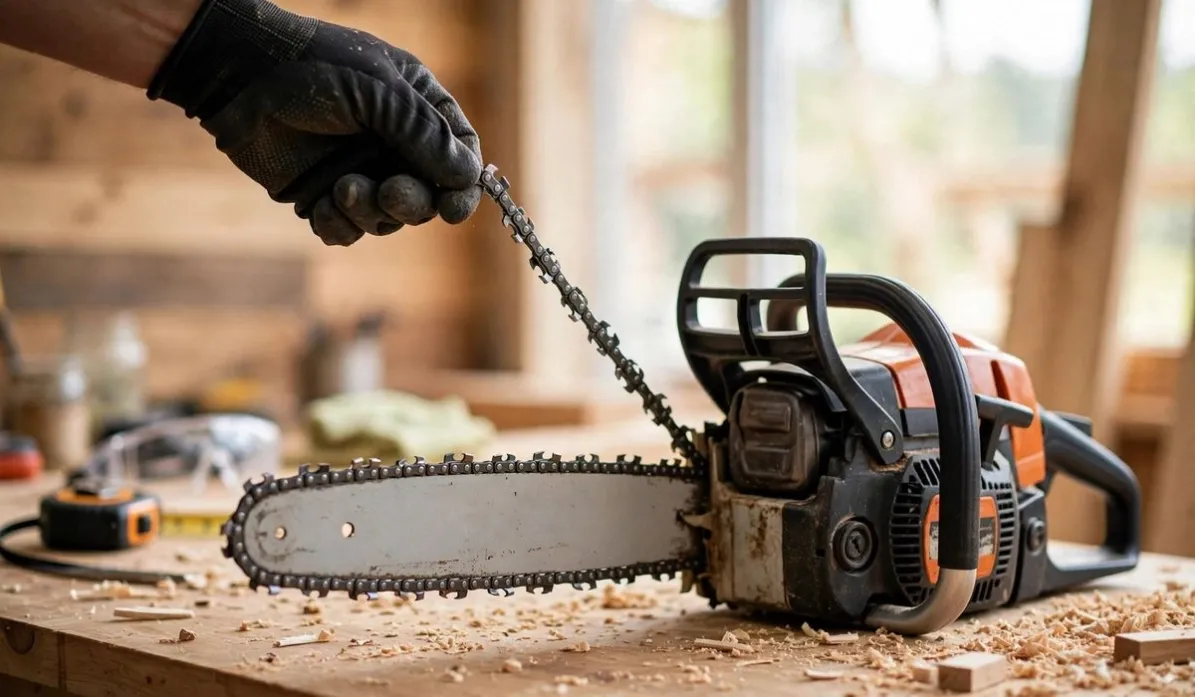
A customer brings a saw back to your shop with a bar that is worn on one side, a chain that keeps throwing, and a complaint that the saw "just doesn't cut straight anymore." You check the bar, the chain, the sprocket — and the real culprit is the simplest thing in the whole machine: the chain was never tensioned properly.
For distributors and repair shops, this is a familiar pattern. A badly tensioned chain does not just annoy the end user. It wears out the bar, stretches the chain, and puts extra load on the clutch drum and the drive sprocket. The customer blames the parts. The shop absorbs the comeback. And the parts that failed early were never the problem in the first place.
The check takes five minutes
Chain tension is not a setting you get right once and forget. A chain heats up as it works, stretches as it wears, and a new chain stretches fastest of all in its first hours. The check belongs in every routine service, and it is worth teaching your customers to do it themselves.
Here is the method that works across the common professional saws — Stihl, Husqvarna, and Echo alike:
- Warm the saw up first. Run it for five to ten minutes, then switch it off. A cold chain reads tighter than it really is, so adjusting on a cold saw is how chains end up too tight in real work.
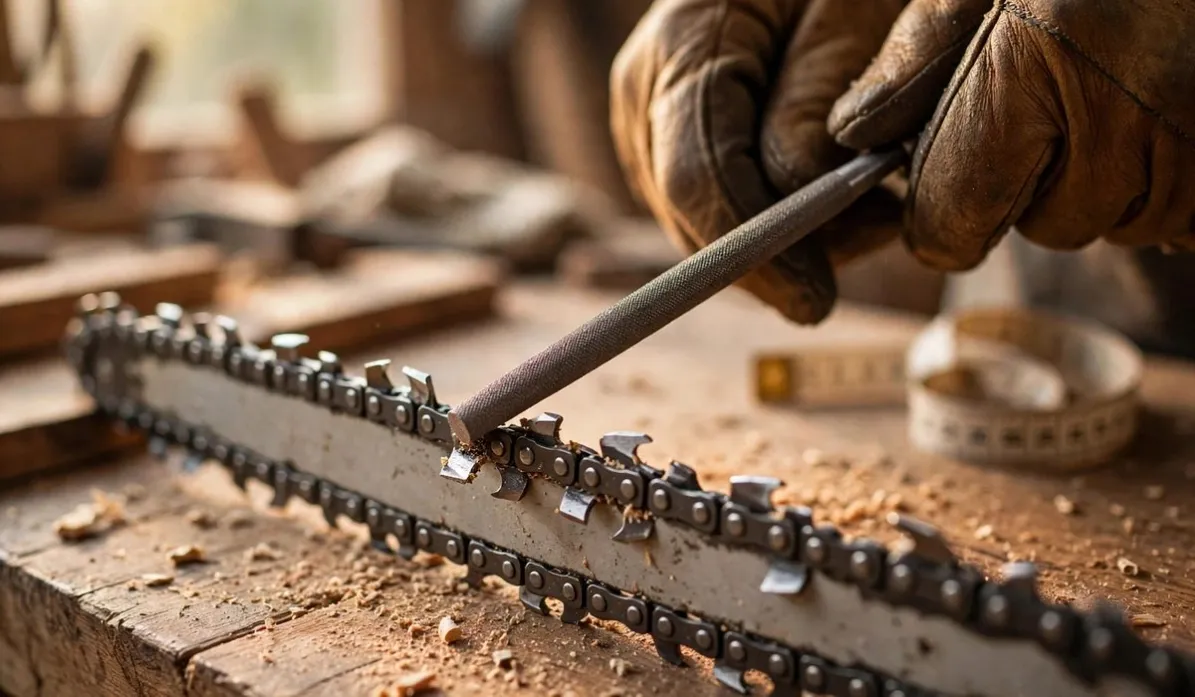
- Lift the chain at the middle of the bar. Pull the chain away from the bar with your fingers. It should lift a few millimetres and snap back. If it hangs loose and sags below the bar, it is too slack. If you can barely move it, it is too tight.
- Check the pull. The chain should travel around the bar by hand with steady, even resistance. Any tight spot as you pull it round points to a damaged link or a worn sprocket, not a tension problem.
- Adjust and re-check. Loosen the bar nuts, turn the tensioning screw until the chain sits snug against the bar with no sag, then tighten the nuts and pull the chain round once more. On a new chain, repeat the check after the first tank of fuel — new chains stretch, and a chain that was right at fitting time can be slack within an hour of cutting.
Too loose is obvious. Too tight is the expensive one
A loose chain is easy to spot: it sags, it rattles, and sooner or later it derails and chews the bar rails. Most users learn that lesson quickly.
A chain that is too tight does its damage quietly. It drags on the bar rails, heats the bar nose, and loads the bearings and the clutch drum. The bar wears unevenly, the chain stretches faster, and the saw feels sluggish even with a sharp chain. Customers rarely connect those symptoms to tension — they come in asking for a new bar, a new chain, and sometimes a new clutch drum, when the part that actually failed was the five-minute check nobody did.
That is the point worth passing on to your customers. A bar should last through several chains. When a bar comes back worn after a single chain, tension is the first thing to ask about, not the last.
What this means for your stock
Tension problems also point to a part that repair shops replace more often than they expect: the chain adjuster itself. A stripped or slipping adjuster screw makes correct tension impossible, and customers keep fighting the same loose chain until the adjuster is replaced. It is a small, low-cost part, and it is one of the items worth keeping on the shelf in the sizes that match the saws your customers actually run.
When you fit a replacement adjuster, the same rule applies as with any wear part: the sample your customer tests and the bulk order that follows should be the same part, made to the same standard. At Zhongfan, every part — from chain adjusters and sprockets to clutch drums and oil pumps — is produced under ISO 9001 and ISO 14000 certified manufacturing, and the samples we send and the bulk orders we ship share the same standard. A customer who tests a sample should be able to order with confidence that the next hundred will perform the same way.
The takeaway for your customers
Teach the five-minute check at the counter, or print it on a card with every saw you service:
- Warm up, then check.
- Lift the chain: snug, not sagging, not stiff.
- Pull it round by hand and feel for tight spots.
- New chains get checked again after the first tank.
It costs your customers nothing, it saves them a bar, and it saves you the comeback.
What saws do your customers service most? Tell us the models you see every week — Stihl, Husqvarna, Echo, or anything else — and we will help you match the right chain adjusters, sprockets, and clutch drums to them. Or browse the full range at https://www.zfmparts.com/products and see what fits your shelves.