Buying Guides
How Long Does a Chainsaw Bar Last?
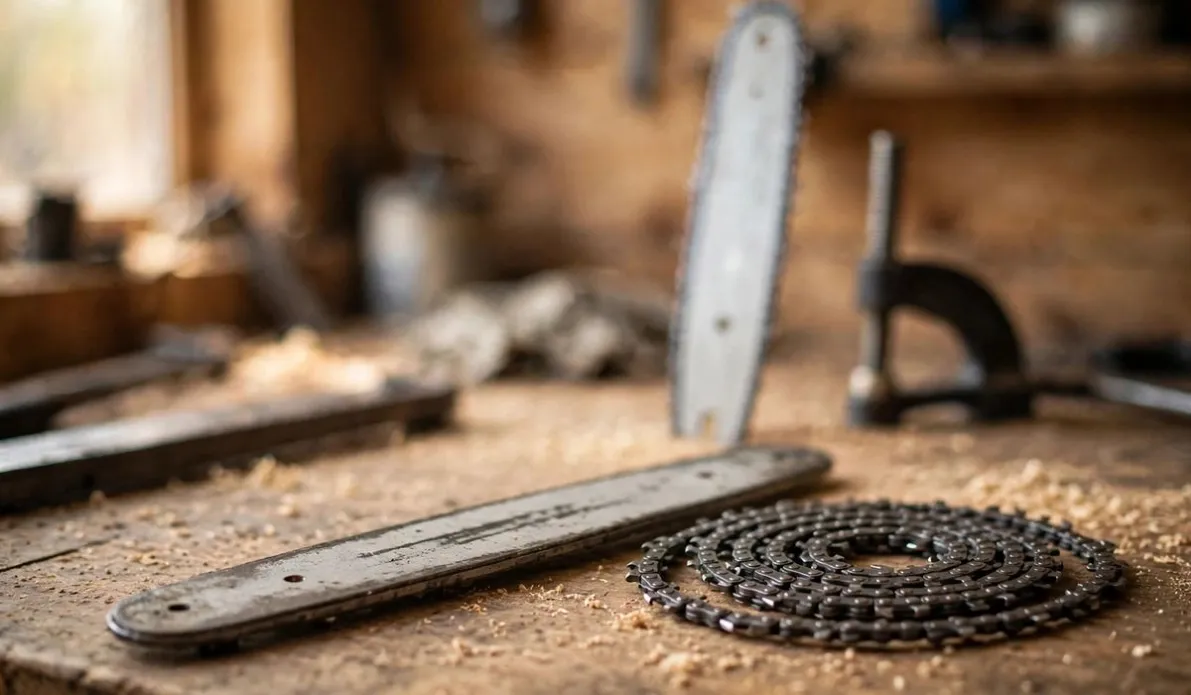
A customer brings in a chainsaw with a bar that is worn thin on one rail, the groove pinched at the tip, and a chain that keeps throwing itself off. He has already bought two new chains for it — and both wore out faster than the first one did.
For a distributor or repair shop, this is a familiar and costly pattern. The bar is the part everyone forgets until it fails, and when it does, it takes the chain with it. Knowing how long a bar should last and what shortens its life turns a repeat complaint into a straightforward parts sale — and keeps the customer from blaming the chain you sold him.
What a normal bar life looks like
There is no single number, because a bar's life depends on the wood it cuts, the chain it runs, and how it is looked after. Experienced users commonly report two to five years of regular use, or roughly 100 to 500 cutting hours, before a bar is worn out.
The figure that matters more for your counter is the ratio: most repair shops work on two to three chains per bar. When a customer is on his fourth chain on the same bar, the bar is almost certainly past its best — and the next chain he buys will wear faster than the one before it, because it is running on a worn groove and uneven rails.
The four things that wear a bar out early
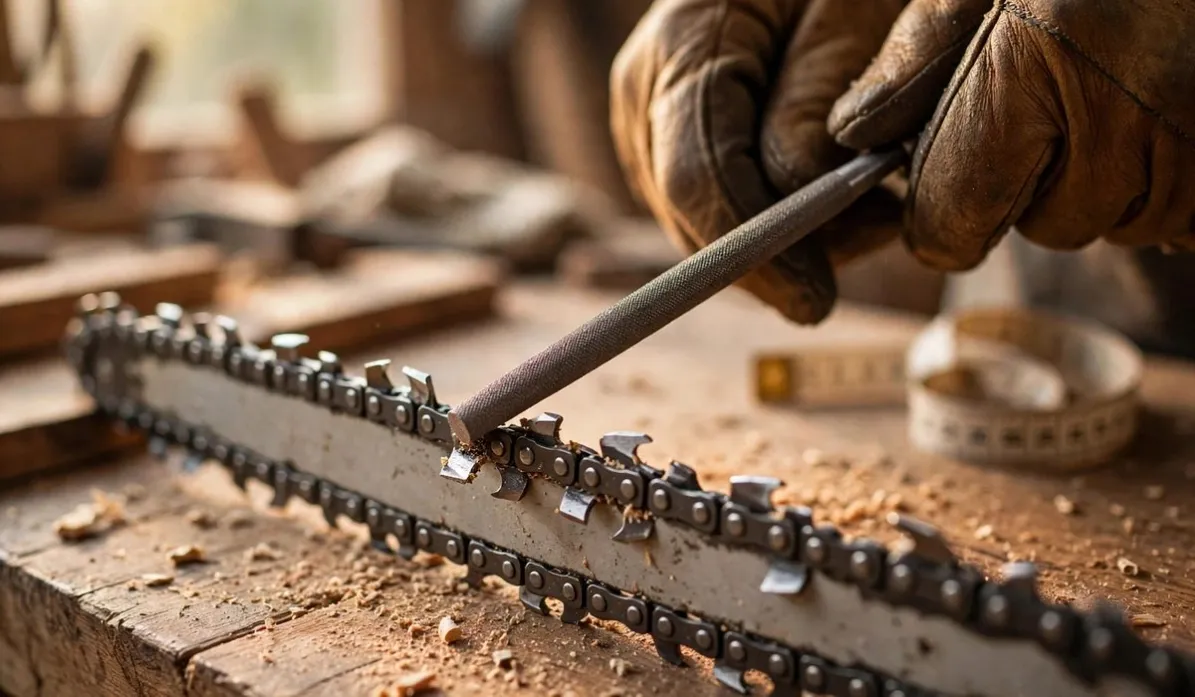
1. Running a dull chain. A blunt chain does not cut; it rubs. The operator pushes harder, the bar heats up, and the rails wear unevenly. A bar that is flipped regularly and run with a sharp chain can last twice as long as one run with a dull chain.
2. Never flipping the bar. A bar wears on the rail it runs against, and it always runs on the same side unless someone turns it over. Flip the bar every one or two chain sharpenings so both rails wear evenly. It takes two minutes, it doubles the even wear life of the bar, and it is the single most useful piece of advice you can give a saw owner.
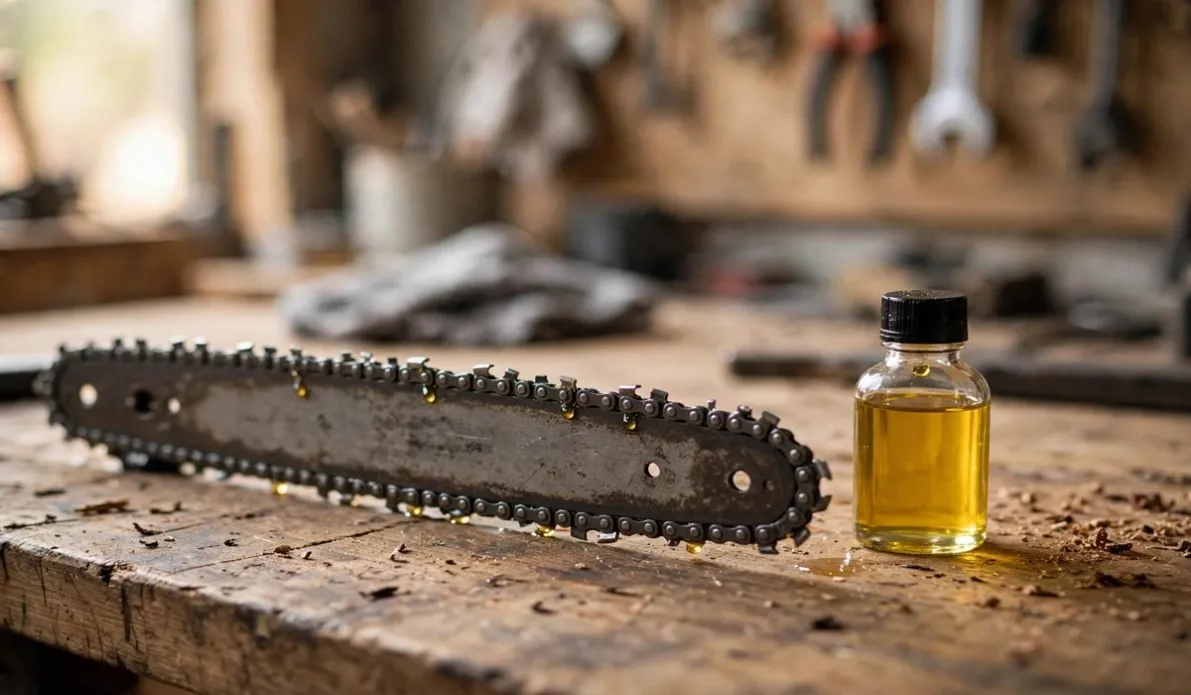
3. A dirty groove and a blocked oil hole. Sawdust and resin pack into the bar groove and the small oil inlet hole, starving the bar of oil exactly where it needs it most. Clean the groove with a bar groove cleaner or a thin flat tool every time the chain comes off for sharpening, and clear the oil hole.
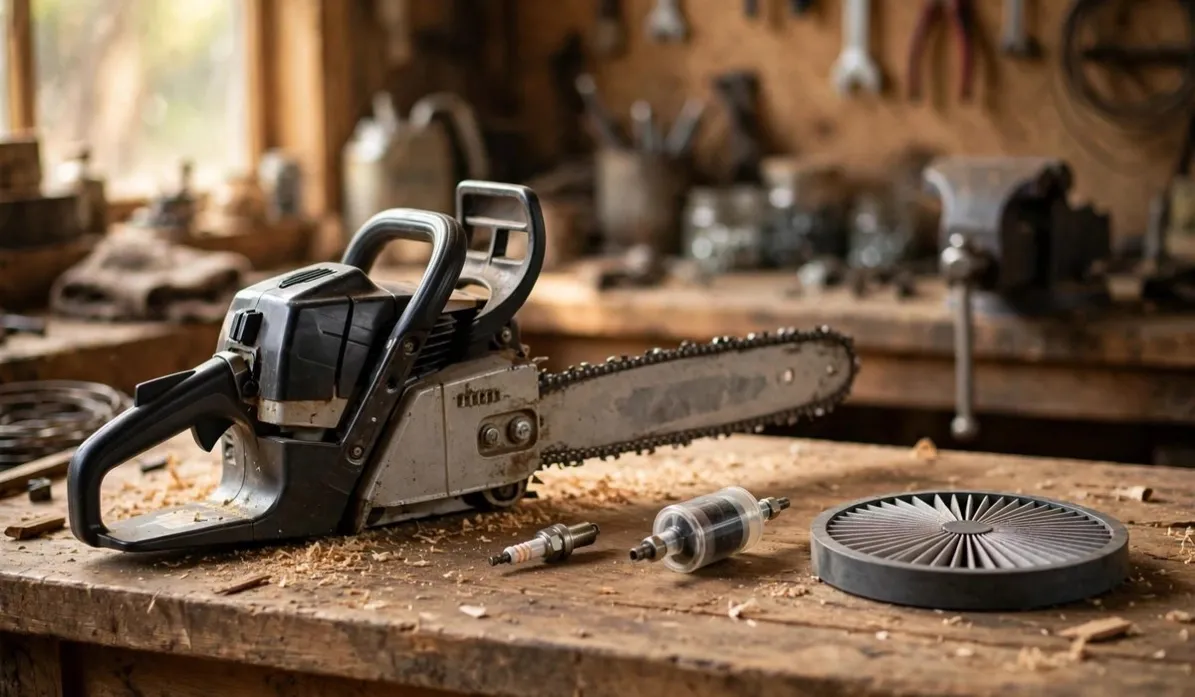
4. A worn sprocket. This is the one customers miss. The bar, the chain, and the sprocket are matched wear parts: a worn sprocket drives the chain unevenly, and the uneven drive wears the bar rails and the chain together. When a bar is worn out, check the sprocket and the clutch drum at the same time. Replacing a worn sprocket with a new bar and chain is what stops the same customer coming back with the same complaint in a month.
When to tell a customer the bar is finished
A bar is done when the rails are visibly thinner on one side than the other, when the groove is wider than the chain's drive links and the chain rocks side to side, when the tip sprocket is seized or rough, or when the bar is bent or cracked. A quick check at the counter: lay a straight edge along the rail. If the rail is dished or the groove pinches the chain, no amount of sharpening will fix it.
It is also worth checking the fit before selling a replacement. Bars differ by mount, length, gauge, and pitch — match the bar to the saw model and the chain the customer already runs, and the new bar will last its full life.
Why this matters for your parts business
A bar sale is rarely a bar sale on its own. A customer who needs a bar usually needs a chain, and very often a sprocket — and when all three are replaced together, the whole cutting system starts fresh and wears evenly.
That is also why the quality of the replacement parts matters more than their price. A bar and sprocket that are built to the same standard as the original keep the new chain cutting straight and lasting its full life. We supply bars, chains, sprockets, rims, and clutch drums matched by saw brand and model, built to ISO9001 and ISO14000 standards — and the samples you approve are made to the same standard as the bulk order that follows. Your customer gets parts that fit and wear the way the originals did, and you get fewer comebacks.
A habit worth passing on
The cheapest advice you can give a saw owner is a routine: flip the bar every one or two sharpenings, clean the groove every time the chain comes off, and check the sprocket whenever a bar is replaced.
If you service a lot of saws, it helps to know which models your customers bring in most — bars, chains, and sprockets differ by model, and stocking the right ones for your top sellers keeps the repair moving. Tell us which models you service most, and we will match the bar, chain, and sprocket parts to fit them. Or browse the full range at https://www.zfmparts.com/products and pick the parts your workshop needs.