Buying Guides
Fuel Mix and Ethanol: What Actually Kills Your Saw
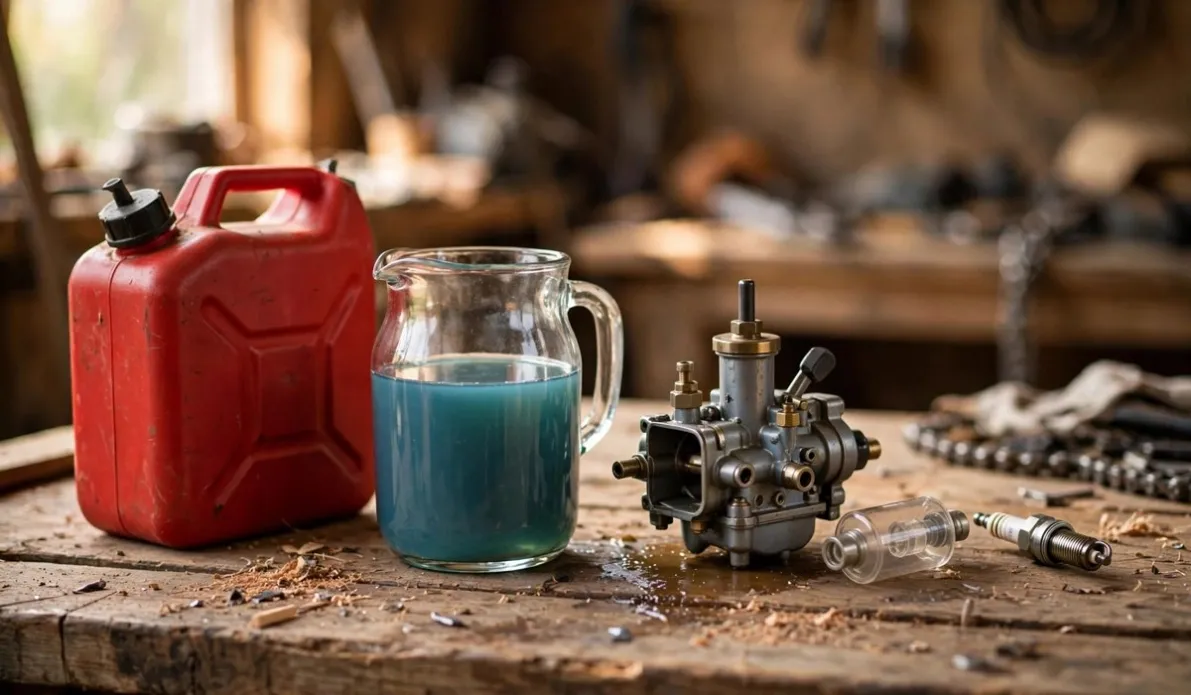
Every spring, the same saws come back through the shop door: a machine that ran fine all autumn, now silent after a dozen pulls — or a cough, a sputter, then nothing. The saw is not worn out and the engine is not dead. In most cases, the thing that killed it sat in the tank all winter: stale fuel.
For distributors and repair shops, this is one of the most common — and most preventable — comebacks in the business. The fix is usually a small, low-cost part.
Ethanol is the part nobody warns customers about
Most pump petrol contains ethanol, and ethanol is the trouble: it absorbs moisture from the air, and once it has absorbed enough, the fuel separates — water and ethanol sink to the bottom of the tank, at the fuel pick-up. The saw ends up trying to run on water and alcohol instead of petrol and oil.
Left sitting, that separated fuel turns to varnish and gum, coating the carburetor and blocking the tiny passages that meter fuel. Thirty days is enough for untreated fuel to start going bad; after a winter in the shed, it is often unusable.
Three parts take the damage first
The carburetor. This is where most of the damage lands. Gummed jets and hardened diaphragms mean the saw will not start, or will not idle once it does — the classic "starts, then dies" complaint. Months in stale fuel usually means more than a clean: the diaphragms and gaskets are consumables, and a rebuild kit or a replacement carburetor is the honest fix. A Stihl MS 250 carburetor replacement is one of the most common workshop repairs — keep the right ones on the shelf and a comeback becomes a same-day repair.
The fuel filter. It sits at the end of the fuel line inside the tank, catching the worst of the varnish and debris. A clogged fuel filter starves the engine at full throttle, so the saw starts, revs, then bogs down under load. It is the cheapest part in the fuel system and the most often overlooked — replace it whenever a saw comes in with fuel symptoms, or whenever the carburetor is serviced.
The fuel lines. Ethanol hardens and cracks rubber fuel lines over time. A cracked line sucks air instead of fuel — hard starting, rough running, no power — which looks exactly like a carburetor fault until you find the split. Fuel lines are a consumable, not a lifetime part, and they belong in the same service kit as the filter.
The ten-minute diagnosis
- Smell the fuel. Fresh two-stroke mix smells sharp and clean; stale fuel smells sour or varnish-like. If in doubt, drain it.
- Refill with a fresh mix — high-octane, ethanol-free petrol where available, at the ratio the manufacturer specifies. Fresh fuel alone fixes a surprising number of "dead" saws.
- Check the fuel filter. Pull it out of the tank — if it is dark, swollen, or clogged, replace it before doing anything else.
- Look at the carburetor. If fresh fuel and a new filter do not bring the saw back, a rebuild kit covers the diaphragms and gaskets; if the body is varnished solid, a replacement is the faster answer.
- Check spark and air last. A fouled plug and a blocked air filter are cheap to rule out — but a saw that ran fine before storage and now will not start usually has a fuel problem, not a spark or air problem.
What to tell your customers — and what to stock
Pass this on: never store a saw with fuel in the tank — run it dry at the end of the season. Use ethanol-free fuel when you can get it. Add a fuel stabiliser if fuel will sit for more than thirty days, and date the can. And mix only what will be used within a month — a half-used can from last season is a carburetor rebuild waiting to happen.
For your own shelves, the lesson is just as clear: fuel-system parts — carburetors, rebuild kits, fuel filters, fuel lines, spark plugs and air filters — are the fast-moving consumables of every cutting season. They are the difference between a customer who walks out with a working saw and one who walks out wondering whether to buy a new one.
The same rule applies as with any wear part: the sample your customer tests and the bulk order that follows should be the same part, made to the same standard. At Zhongfan, every part — carburetors, fuel filters, sprockets, clutch drums, oil pumps — is made under ISO 9001 and ISO 14000 certified manufacturing, and samples and bulk orders share the same standard.
The takeaway for your customers
Most "dead" saws are not dead at all — they spent the winter drinking stale fuel, and the repair is usually one small part and ten minutes of diagnosis. Teach customers to store saws dry, mix fresh fuel, and change the filter at service time, and the spring rush of no-start complaints shrinks fast.
What saws do your customers service most? Tell us the models you see every week — Stihl, Husqvarna, Echo, or anything else — and we will help you match the right carburetors and fuel filters to them. Or browse the full range of aftermarket chainsaw parts at https://www.zfmparts.com/products.