Buying Guides
Rim Sprocket and Clutch Drum Wear: When to Replace Them
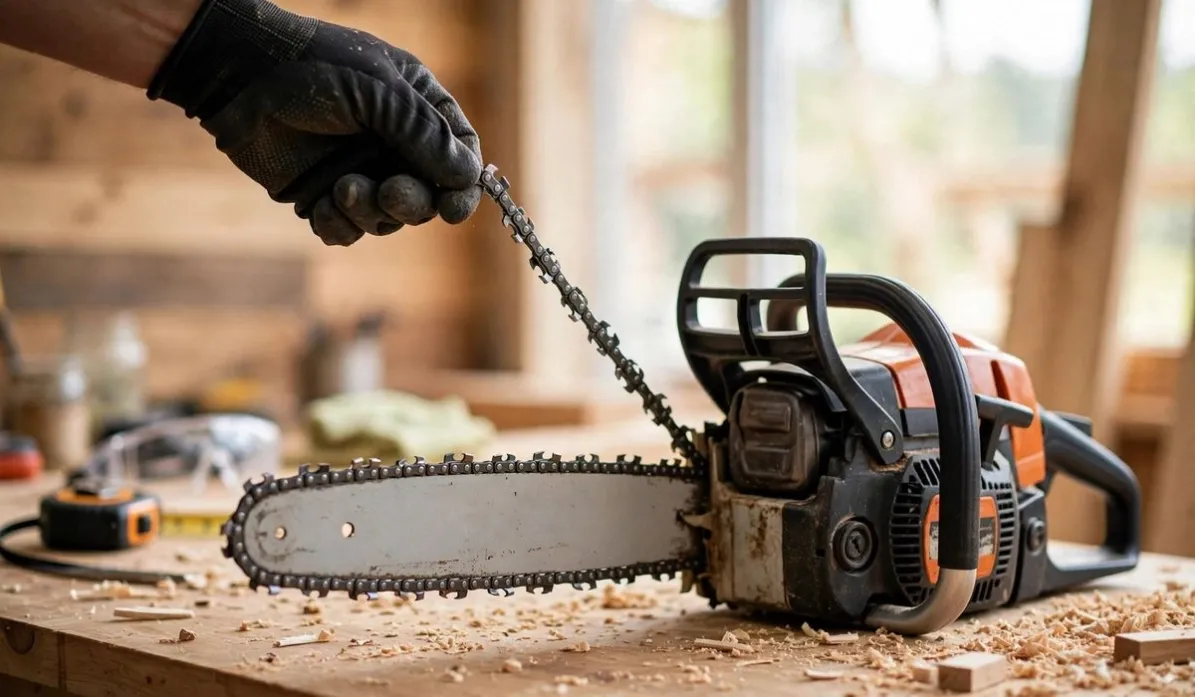
A customer fits a brand-new chain, and the saw still slips, cuts crooked, or throws the chain off the bar. The chain is not the problem. The sprocket driving it is.
For distributors and repair shops, this is one of the most common — and most misunderstood — wear problems in chainsaw service. A worn rim sprocket or clutch drum quietly destroys new chains, and the customer blames the chain. Knowing when to replace a chainsaw sprocket is a small piece of advice that saves your customers money and earns you the repeat parts order.
The part your customers forget to check
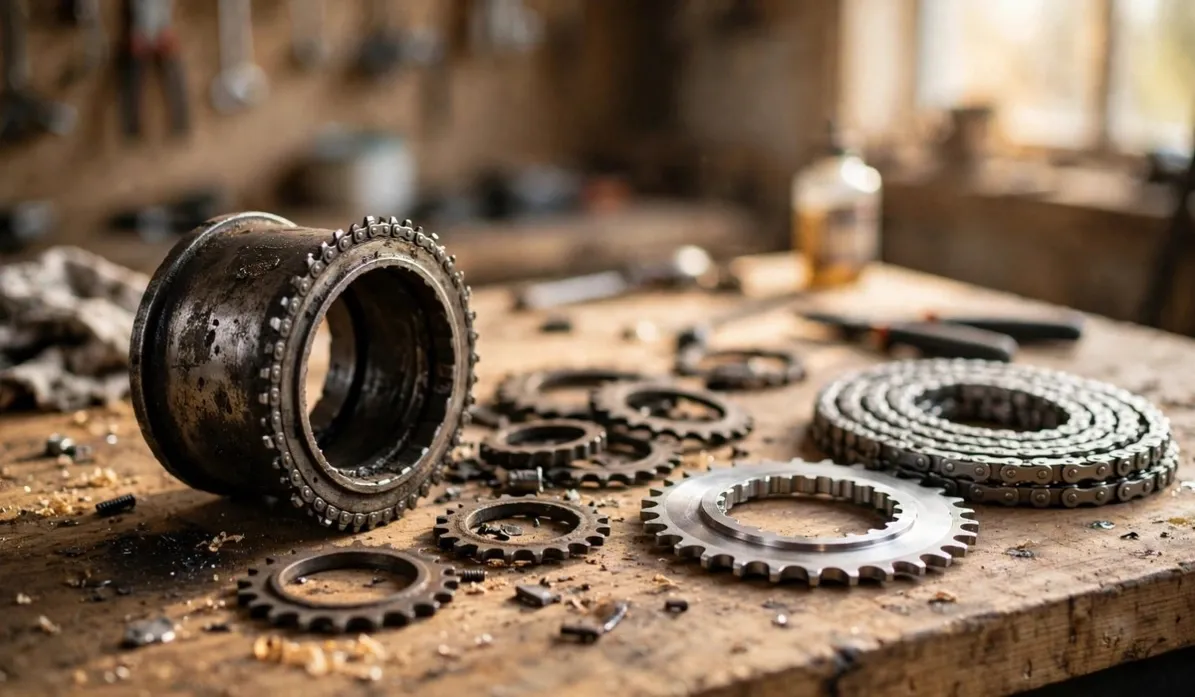
The sprocket is the small toothed wheel that drives the chain. On most professional saws it sits on a replaceable rim that clips onto the clutch drum; on smaller homeowner saws the sprocket is often machined into the drum itself (a spur sprocket). Either way, it takes the full force of the chain on every cut, and it wears — slowly at first, then fast.
A worn sprocket does not announce itself the way a blunt chain does. The saw still runs. But three signs give it away:
The chain slips under load. The saw revs, the chain hesitates, and cutting power disappears — especially in hardwood. The teeth of the sprocket have worn into hooks and no longer grip the chain's drive links.
The chain wears out too fast. A customer who replaces chains every few weeks instead of every few months is usually running them on a worn sprocket. The sprocket's uneven teeth chew through drive links, and a new chain on a worn sprocket can be ruined in a single day of heavy cutting.
The clutch drum shows grooves or blueing. Deep wear marks on the drum's rim seat, a drum that runs hot, or a rattling, uneven idle all point to a drum that has done its time. A worn clutch drum chainsaw owners ignore will eventually damage the needle bearing and the crankshaft — a repair that costs many times more than a drum.
Rim or spur: replace the right piece
This is where a little product knowledge saves your customer real money. On a rim-type system, only the rim wears — the clutch drum itself often lasts through several rims. Replacing a rim takes minutes and costs a fraction of a full drum. On a spur-type (one-piece) drum, the whole drum must go when the teeth wear.
The rule of thumb used by most repair shops: replace the rim sprocket every two chains, and check the drum every time a chain is changed. A rim is cheap insurance; a chain is not. When a customer buys a new chain, that is the moment to ask how old the sprocket is — and to suggest a chainsaw sprocket kit that includes the rim, drum, and needle bearing together, so the whole drive end is fresh at once.
The fitment detail that decides the sale
Sprockets are not universal. Pitch and tooth count must match the chain — the common sizes are the 3/8 7 tooth rim sprocket and the 325-7 tooth rim sprocket — and the drum must match the saw model. The best-selling fitments in our range are the clutch drum for Stihl MS 261 (3/8" 7 tooth) and the clutch drum for Husqvarna 372XP (3/8" 7 tooth), but the same logic applies across the range: Stihl MS 170 and MS 180, MS 250 and MS 271, Husqvarna 365 and 372, Echo CS-590 and CS-620.
A distributor who stocks by model rather than by generic size avoids the most common returns in this category: a sprocket that fits the pitch but not the spline. When in doubt, ask the customer for the saw model and the chain pitch — two answers, and the fitment is settled.
What a worn sprocket costs your customer
Put it in terms your customers understand. A worn rim sprocket shortens the life of every chain that runs on it, adds vibration that wears the guide bar, and wastes cutting time on every job. The sprocket itself is one of the cheapest wearing parts on the saw. The chain it destroys is not, and the downtime it causes is worth more than both.
For a repair shop, the sprocket check is also a natural upsell that customers welcome: it is a genuine wear item, it is visible once you point it out, and replacing it fixes a problem the customer already felt but could not name. Stock the fast movers — rims in 3/8" and .325" 7-tooth, clutch drum sprocket kits for the popular Stihl and Husqvarna models — and the part sells itself at the counter.
Quality you can stand behind
Every clutch drum and rim sprocket we supply is made to the same standard for samples and bulk orders — the sample your customer tests is the product your whole shipment matches. Our production runs under ISO9001 and ISO14000, so the fitment, the heat treatment, and the finish are consistent from the first carton to the last.
The takeaway for your customers
When a saw slips under load, eats chains, or throws them off the bar, look at the sprocket before blaming the chain. Replace the rim every two chains, check the drum with every chain change, and match pitch, tooth count, and saw model before ordering.
Which models do your customers service most? Tell us the saws you see every week — Stihl, Husqvarna, Echo, or anything else — and we will help you match the right aftermarket chainsaw parts to them. Or browse the full range at https://www.zfmparts.com/products.